

Travel eSIMs you may like:
Ask anyone what's on their travel bucket list, and France will probably be there. It's a country that really does have it all: an incredibly rich history, the one and only Eiffel Tower, and over a thousand different types of cheese (1,600 to be exact).
Need we go on?
So if France is on your bucket list and you're "just" doing some harmless research (i.e. looking for any excuse to book a flight to see the Notre Dame asap), read on for the quirkiest, fun(est) facts about France.
Tasty Tidbits on French Cuisine
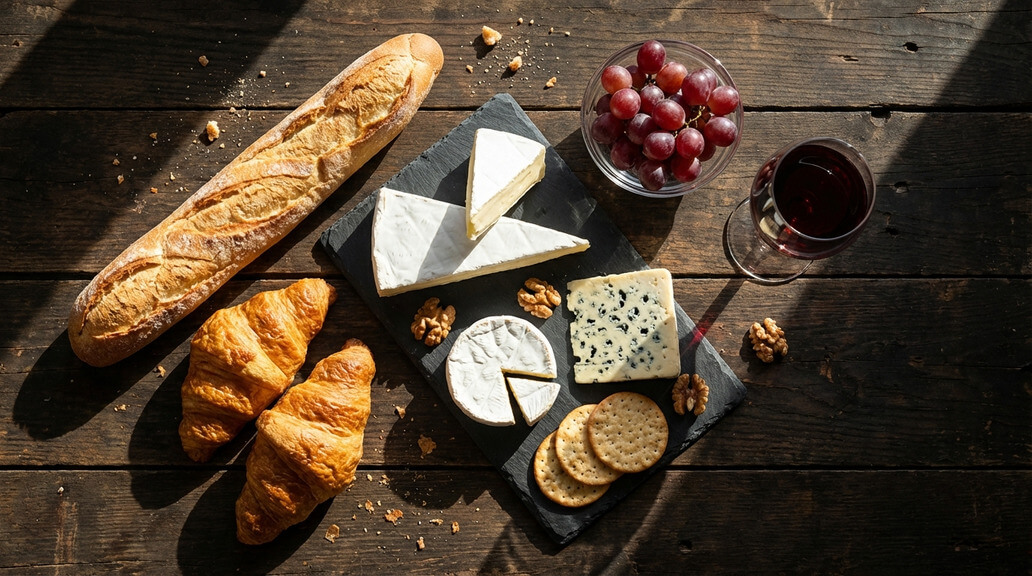
If there is one thing France does exceptionally well, it's food and drink. The French love food, and French gastronomy is renowned for its elegance and rich, hearty flavours.
France has up to 1,600 types of cheese.
Cheese is a full-on identity for French people. And it's believed that the country produces between 1,000 and 1,600 different varieties of cheese. Think Brie, Camembert, and Roquefort. All delicious, all originating in France.
Pro Tip: While travelling in France, make sure to use a travel eSIM (like ZenSim) so you can do your research and know exactly what cheese to order with your wine. C'est parfait!
Paris is the birthplace of the modern restaurant.
The concept of the modern restaurant was actually born in 18th-century Paris. At the time, it was possible to dine outside the home at taverns or inns, but meals were communal and only available at certain times of the day. In 1765, entrepreneur Mathurin Roze de Chantoiseau opened the first modern-day restaurant, which offered individual, fixed-price dishes that could be purchased at any time.
Only Champagne from Champagne is truly Champagne.
The Champagne region of France, located in the northeast of the country, is the only region in the world that can legally produce sparkling wine labelled as "Champagne". This is serious business, and there are actually a lot of regulations that protect the Champagne region's historic winemaking methods.
France is a world leader in wine exports.
Beyond Champagne, France also takes the rest of its wine production very seriously. In fact, France produces and exports the most wine in the world. Regions like Bordeaux, Burgundy, and the Loire Valley are internationally renowned for their centuries-old winemaking methods and traditions.
Croissants came from Vienna, not Paris.
It's normal to associate croissants with France, but croissants actually originated in Austria, not France.
There's a twist in the tale, though, because the Austrian pastry (originally called "Kipferl") was brought over to France in the 19th century. French bakers took the idea and ran with it, transforming Kipferls into the flaky, buttery version of the modern-day croissant we eat today.
So go ahead and use the croissant emoji when posting your travel photos from France, because even though the French didn't invent the croissant, they most certainly did perfect the recipe.
Not-So-Boring France Facts on History and Geography
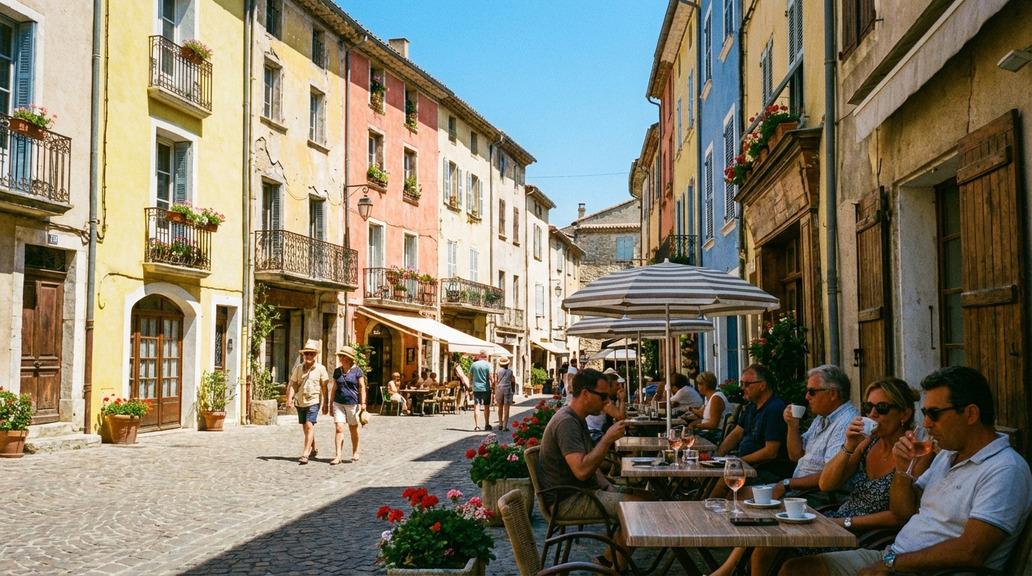
Think France is just berets, baguettes, and Bordeaux? Think again. As the largest country in Western Europe, France has a past and landscape as diverse (and dramatic) as the Paris runway.
France has the most time zones in the world.
Thanks to France's overseas territories, the country holds the record for the most time zones covered by a single country. While mainland France operates on Central European Time, France's global reach extends far beyond the borders of Europe. This is all thanks to France's 12 overseas territories, which span regions in the Caribbean, South America, Polynesia, and even Antarctica.
Officially, France has 12 different time zones. This is more than any other nation, including Russia, which only spans across 11 time zones.
The capital city, Paris, was once called "the swamp".
The earliest documented name for the area now known as Paris was "Lutetia", which scholars believe derives from the Celtic word for "swamp" or "marsh". This name was chosen by Roman settlers, likely to reflect the muddy, swampy environment of early settlements situated near the Seine River.
Fast forward a couple of hundred years, and the city's name evolved and changed to Paris in honour of the Parisii tribe that originally inhabited the area.
Would Paris still be one of the most visited cities in the world if it were still called “Swamp”? Hard to say. L’amour in Lutetia doesn’t quite have the same ring to it.
King Louis XIV ruled France for a jaw-breaking 72 years (the longest reign of a Monarch in European history).
One of the most famous French people to date, King Louis XIV, ruled France for 72 years from 1643 to 1715. This is longer than any other monarch in European history. King Louis XIV is best known for building his royal residence, the Palace of Versailles. This is where he carried out his day-to-day governing, which involved running the French government, directing the French army, and, of course, hosting the most extravagant parties.
The metric system was invented in France during the French Revolution.
If you've ever measured something in litres or kilometres, thank the French! The metric system was invented during the French Revolution in the late 1700s as a way to standardise weights and measurements. At the time, different countries and even regions within France used their own measurement systems. Having one unified system made life so much easier for French engineers, builders, and artists, and eventually the system spread to the rest of the world!
France is the largest country in western Europe.
Of all the countries in western Europe, mainland France is the largest. And across Europe as a whole, France is the third-largest country, sitting behind Ukraine and Russia.
What's so impressive, though, is how much France's landscape varies from region to region. You've got the French Alps, where you can climb Mont Blanc (the highest mountain in the Alps). Or, head west to the coast for incredible seafood and some of the most stunning views of the Atlantic Ocean. In the south, you'll find the Pyrenees Mountains and more of a laid-back, Mediterranean vibe similar to neighbouring countries Spain and Italy.
There really is something for everyone across this country that spans 543,000+ square kilometres.
France's nickname is "l’Hexagone".
If you look at mainland France on a map, you'll notice it has a six-sided shape, like a Hexagon. That's why a common nickname for the country is "l'Hexagone", which literally translates to "the hexagon" in the French language. You may see this word in newspapers or business contexts as a symbol for one unified, continental France.
Paris has a massive underground world.
Underneath the iconic Paris Gare du Nord train station, the Louvre museum, and the Arc de Triomphe lies a massive underground network of tunnels, sewer systems, and limestone quarries.
Most notably, though, is the Paris Catacombs, which are located approximately 20 metres below ground. These catacombs were built out of necessity in the late 18th century due to overcrowding in cemeteries. It's estimated that the catacombs hold the remains of over six million people, with small sections of the catacombs still open to the public for tours.
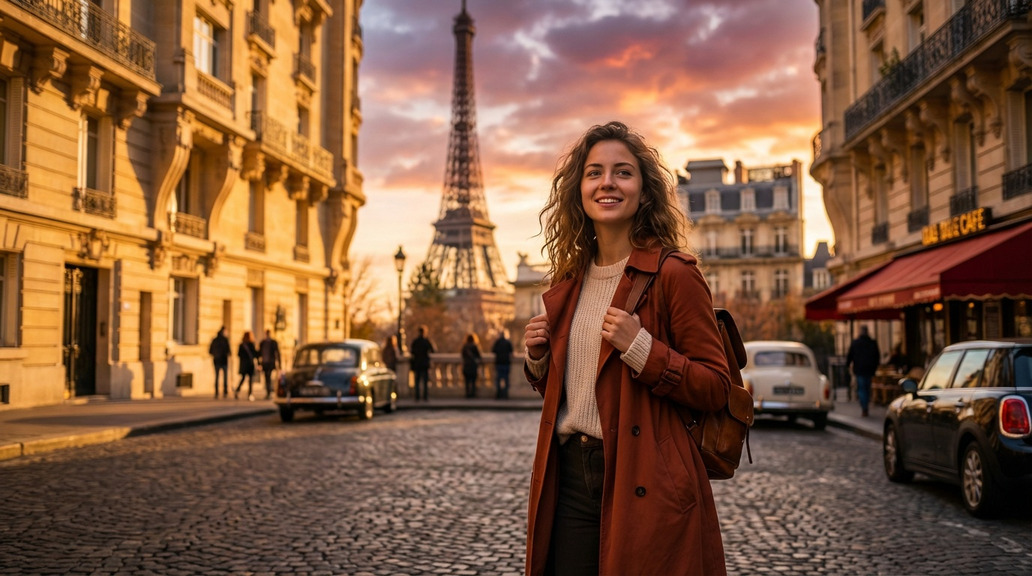
A Country of Trend-Setters
France is a country of thinkers and doers, and it has been for centuries. The following fun facts highlight the impact France has had on all things technology, art, and culture.
The Paris Métro was among the world’s first underground transit systems.
The French railway network was established in the early 1800s, and by the year 1900, Paris officially opened the Paris Métro, making France one of the first countries in the world to invest in an underground transit system. Today, the system has over 300 stations spanning over 245km of track. Some stations, even today, still feature original Art Nouveau entrances designed by Hector Guimard.
Pro Tip: If you're travelling around France, make sure to download your travel eSIM before you travel. That way, you can skip the airport SIM card kiosks and start navigating, translating, and instagram-ing your way around France without missing a beat!
Paris wasn’t always the fashion capital of the world.
When you think of Paris, you can't help but think of high-end fashion designers and models. But Paris only rose to fashion dominance in the 1900s, thanks to the work of iconic fashion designers like Coco Chanel, Yves Saint Laurent, and Christian Dior. This is why France is one of the world's most visited countries for anyone working in fashion.
France published the first feminist newspaper.
One of the earliest publications dedicated to women's rights and feminist thought, Le Journal des Dames, was published in 1832. This publication addressed some of the most pressing feminist issues at the time, including access to education, voting rights, and marriage rights, long before these ideas hit the mainstream.
France has a booming video game industry.
Today, France is home to one of Europe's most dynamic video game industries, with video game giants like Ubisoft maintaining a strong presence in the country. It only makes sense, considering France's strong roots in the world of art, design, and storytelling.
Interesting Facts About France's Traditions and Events
No matter what they do, you can always count on the French to do it in style. The following traditions offer a glimpse into the French psyche and what makes the French Republic so unique.
The French don’t call it "Bastille Day".
You've probably heard of Bastille Day before, which commemorates the 1789 storming of the Bastille prison. But if you ever go to France, you'll never see it referred to as "Bastille Day". Instead, the holiday is more formally referred to as "La Fête Nationale", or sometimes "la Fête de la Fédération".
This holiday takes place annually on July 14th, and if you're visiting around that time, you'll be sure to find plenty of French flags on display along with French music, fireworks, and parades up and down the country.
April Fools’ Day is all about fish.
Forget prank calls when you're in France. On April 1st, French kids play a different kind of prank called "Poisson d’Avril". This tradition involves secretly sticking a paper fish onto the backs of unsuspecting victims, and then shouting "Poisson d’Avril!" when the sticker is noticed. "Poisson d'Avril" literally translates to "April Fish", a quirky variation of the holiday worth getting involved with if you travel to France in April.
The Tour de France changes its route each year.
One of the most popular sporting events of the year is the Tour de France, which has been a tradition since 1903. In true French fashion, the route changes every year, highlighting different mountain passes, coastal roads, and the most picturesque countryside villages across the country. The Tour de France really is a spectacle, and it draws nearly 200 cyclists and 12 million spectators each year.
Making the Most of Your French Adventure
If this list of fun facts about France has you daydreaming about seeing the Mona Lisa in real life or hitting the slopes at Mont Blanc, it's about time to book some flights. Consider the following tips for effortless travel across France.
Plan your route carefully.
France is massive, and although well-connected, it can take some time to get from point A to point B. You don't need to have every minute planned out in advance, but it's a good idea to map out a general itinerary with all the key stops you want to hit.
Time your trip around the French social calendar.
France is like the "it girl" of Europe with a packed social calendar. If you're not sure when to go to France, do a quick Google search to see what sorts of holidays, festivals, and celebrations tickle your fancy. You'll find quite a lot of options, such as lavender festivals, hot air balloon festivals, and even truffle festivals, to name a few.
Take time to learn some French (the French will appreciate it).
The official language of France is French, and it's what the people everywhere will speak when you visit. Knowing even a handful of French phrases ahead of time can take you far, and the locals will certainly appreciate it! Start by learning simple greetings, polite questions, and basic vocabulary, which will help immensely when you're out and about exploring.
Get connected before you go.
Navigating France can be tricky if you don't speak the official language. Before you leave, make sure to download a travel eSIM, so you can have internet access the moment you arrive at the airport. This is helpful for translating signs, purchasing tickets, and ordering a simple coffee or croissant from a local who may not have the best English language skills.
Savouring the Good Life
The people of France love living the good life. And when you visit as a tourist, you'll be invited and encouraged to do the same.
So go ahead and slow down, sip all the wine, and eat all the cheese you can find. A trip to France really does require you to embrace the full, indulgent French experience. Because it would be a bit rude not to do as the French do in France, wouldn't it?
Travel eSIMs you may like:


Written by Holly Grace Callis
Freelance content writer, a big fan of spicy margs.
Holly is our resident digital nomad making the beaches of Mexico home. You’ll usually find her somewhere in LatAm furiously typing about hidden Europe spots or how to wrangle more data from your e-sim deal. After all, it’s not nomad life if you can’t post it on the ‘gram.
Let's connect on LinkedIn 👉
Get amongst it
Join the community
We will reach out when we launch new products, about our sustainability projects, specials, new innovations or maybe even cool sh*t we think is inbox worthy.


