



Bali has been one of the hottest tourist destinations in the world for decades now. Recently, it’s also become one of the top spots for remote workers. This trend was happening even before the pandemic, but COVID 19 made remote work more popular than ever, and people with portable jobs soon realised that they could live in the tropical paradise of Bali for a fraction of what life costs in Australia.

Travel eSIMs you may like:

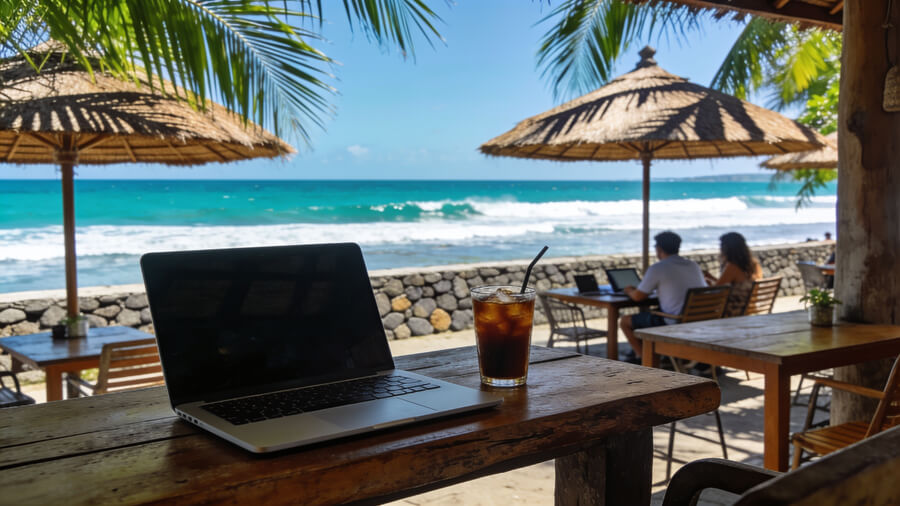
But if you dream of working from the beach, it's important to remember that things aren't always that easy. Indonesian immigration law will decide whether you can work in Bali, and often, a tourist visa isn't going to cut it.
Let's take a look at what you can and can't do in Bali on a tourist visa, and ways that you can make your dream of working remotely from Indonesia come true.
The Harsh Truth
The Indonesian tourism visa is for exactly that, tourism. It's intended to allow people to visit Indonesia, including Bali, to sightsee or to visit friends. But you are not allowed to work.
The main tourist visas you can get to visit Bali include the B1 Standard Tourist Visa. This is also known as the Visa on Arrival, and is open to citizens of qualifying countries who can apply for it either online before they arrive or at the airport once they get there.
Then there's the C1 Visit Visa 211A. This is open to citizens of those countries that aren't eligible for the B1 visa. It's valid for 60 days, and can be extended for up to 180 days, unlike the B1 which is valid for 30 days and can be extended to 60 days. But either way, you can't work.
Be aware, too, that work doesn't necessarily mean clocking in for a nine-to-five. The Indonesian authorities are well aware that some travellers will work at a bar in exchange for free drinks, or look after somebody's house in exchange for being allowed to stay there.
These kinds of barter arrangements also count as work. If you get caught, you could face penalties, including deportation and difficulties getting into Indonesia ever again.
What Counts as Remote Work?
Remote work falls into a bit of a grey area, mostly because it's almost invisible to anyone not looking really hard.
I've answered work emails while on vacation. Technically, that counts as work, and would be a violation of your tourist visa. But is anyone going to know? It's unlikely.
But don't make the mistake of assuming that remote work is exempt. Answering work emails, joining video meetings, freelancing, managing your business remotely, creating content, or running an online store all count as work, and technically, you're not allowed to do any of them while travelling on a tourist visa.
If you do it anyway, get caught, and get into trouble, don't blame us.
What Does the Tourist Visa Allow?
Here's where things get a little bit more complicated.
The B1 visa, or visa on arrival, doesn't allow you to work. However, you are allowed to participate in meetings, conventions, and exhibitions as an attendee. So, for example, if your employer sends you to a tradeshow in Bali (lucky you!), you can enter on the B1 tourist visa without any problems.
However, you're not allowed to sell goods or services. You're not allowed to perform work for pay, and you're not allowed to receive rewards from individuals or companies in Indonesia itself.
The same is true of the C1 visa. You can attend meetings and exhibitions, but you can't sell at them. You can't speak at public events, and you're prohibited from carrying out any profit-making activities in any form, including barter. So no housesitting for free accommodation, no teaching yoga classes in exchange for surfing lessons. Nothing like that.
What About Volunteering?
Lots of people think that because you don't get paid to volunteer, it doesn't count as working. For example, you could work at a sea turtle sanctuary or teach English without getting paid while you're in Bali.
But the authorities are wise to this too. They consider volunteering to be work, even if you don't get paid. Even if you don't get any reward at all, in the form of accommodation, meals, or free admission to attractions.
What Are The Legal Options?
Okay, hopefully it's clear by now that you simply can't work on a Bali tourist visa, not even for free. But it is absolutely possible for Australians to work remotely in Bali. You just have to do it the right way.
Bali has a specific visa for digital nomads, called the E33G. It's valid for up to one year, and lets you work remotely for companies based outside Indonesia.
However, there are two significant drawbacks.
- It doesn't work for freelancers. You will need to show signed contracts with foreign companies guaranteeing the right level of income.
- It's only open to people making more than US$60,000 per year. If that doesn't work for you, there's also the C2 Business Visit Visa. This allows you to carry out business activities including visiting production sites, holding meetings, and signing contracts. However, you still can't sell goods or services, and you can't receive wages or rewards from Indonesian companies.
If you want to actually work in Bali for an Indonesian company, you need a work permit. The E23 KITAS is something the company that wants to hire you would need to apply for, and they will have to prove that the job couldn't be done by a local.
That means you're not going to get this work permit to work in a bar or restaurant. It's reserved for specialist jobs that need access to a global pool of talent.
What about volunteering? The C6 Visit Visa is what you need if you intend to volunteer while in Indonesia. It's valid for 60 days, and is extendable once. It allows you to work on social programs, and also enjoy tourist activities and visit friends and family.
But as with all the other visas, you can't receive payment or incentives for working. You will also need a statement from the organization you are volunteering for, explaining your activities.
Whatever you plan to do in Bali, it's important to stay online. ZenSim offers eSIM cards that automatically connect you to the strongest local network, helping to avoid expensive roaming charges while you travel. You can even get a card that will cover you for multiple destinations across Asia, ideal for a longer trip.
But I've Met Australians and Other Foreigners Working in Bali!
Yes, and they were breaking the law.
All those tourist guides, yoga teachers, surf instructors, bartenders, and English teachers that you'll meet wherever you go in Bali are, most of the time, working illegally. They might be on a tourist visa or a longer stay residence permit, or they might have let their visa expire and be in the country illegally.
Either way, doing what they do is not a good idea. It's only a matter of time before you get caught.
Can I Work Remotely in Bali on a Tourist Visa?
Yeah, nah. Remote work is still work, and that's illegal in Bali if you don't have the right visa.
That doesn't mean people don't do it. Because remote work can be done just about anywhere, it's pretty easy to escape the attention of the authorities while you're tapping away on your laptop. But it is illegal, and can lead to fines, detention, visa cancellation, deportation, and restrictions on future entry to the country.
If you plan to work remotely in Bali, make the effort to get the appropriate visa - in this case, the E33G. You can apply online, and the little bit of hassle it involves is a lot less than the hassle of getting caught by immigration.
Whether you're travelling to Bali as a tourist or as a remote worker, staying connected is vital. An eSIM from ZenSim gives you all the data you need, whether you're posting holiday snapshots or attending Zoom meetings as part of your job.
Travel eSIMs you may like:
Written by
Ryan Frawley
Travel writer and serial border crosser.
I've visited more than 30 countries so far, which sounds impressive until you see how long my travel wish list still is. When I'm not chasing cheap flights, figuring out eSIMs, or getting lost in places I can't properly pronounce, I'm usually writing about travel, remote work, and how to make both a little easier.
If you've ever searched "Can I work remotely from there?" at 2 a.m., we're probably on the same wavelength.

Get amongst it
Join the community
We will reach out when we launch new products, about our sustainability projects, specials, new innovations or maybe even cool sh*t we think is inbox worthy.


